
Visual check
Colour, shape and surface of every lot.

Dry them too fast and they bleach and split. Too slow and they lose their colour and smell. Grade them carelessly and good pods get mixed with poor ones. Every step below is there to stop that from happening.
Pickers take only the pods that have reached full size and are just starting to ripen. Unripe pods are left for the next round, a few weeks later.
The day's harvest is washed in clean water to remove soil, leaf bits and insects before it goes anywhere near the dryer.
This is where the green colour is locked in. Trays of pods go into the cardamom dryer and are dried slowly with controlled heat until the moisture is gone but the skin is still bright and unbroken.
Dried pods are rubbed and cleaned to remove the stalks and the dry flower tips, leaving a smooth, even surface.
Sieves separate the pods by size in millimetres. Then the team picks through each lot by hand, pulling out split, pale or empty pods.
A colour sorting machine checks every pod as it falls and pushes out the pale, brown or marked ones, so each lot looks even from top to bottom.
Each grade is weighed, sealed against moisture and labelled with its grade and lot, ready to ship.
Sealed lots are loaded into containers with the export papers in order, and shipped from Kerala to buyers in the UAE, Europe, South-East Asia and the USA.
A lot only moves to the next step when it passes the check at the end of the one before.
Colour, shape and surface of every lot.
Sample pods measured against the grade.
Firm, dry pods that do not crush.
Every bag weighed before sealing.
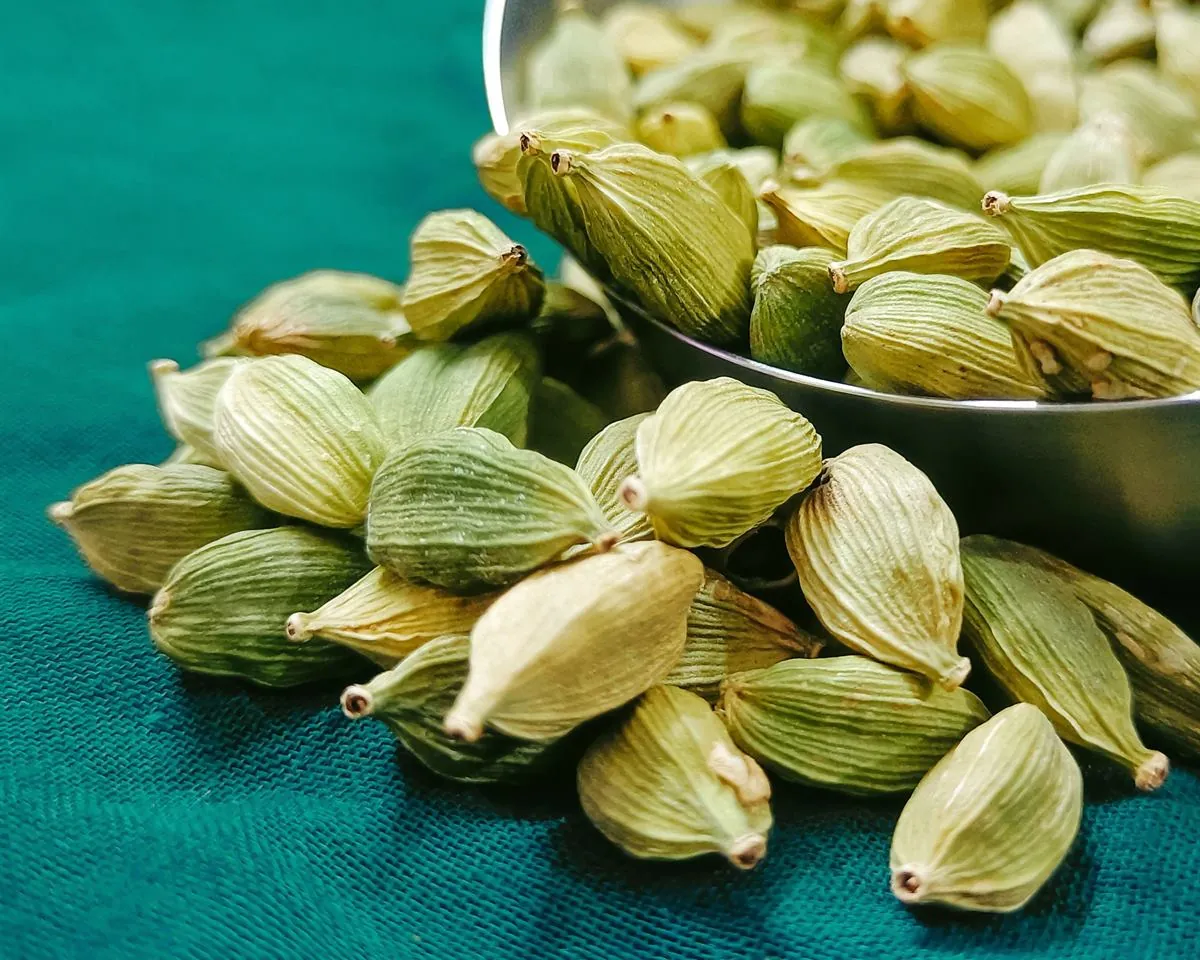
The green colour of cardamom comes from chlorophyll in the husk. Chlorophyll breaks down with too much heat, too much light and too much time — which is why sun-dried or badly dried pods turn pale, yellow or brown.
Drying cardamom well means removing the water from the pod gently enough that the chlorophyll survives. It is slow work, and it cannot be rushed without the colour paying the price.
| Fresh from the plant | After processing | |
|---|---|---|
| Colour | Pale, soft green | Deep, even green |
| Feel | Soft, juicy, bruises easily | Firm, dry, springs back |
| Weight | Heavy with water | Much lighter — most of the water is gone |
| Aroma | Mild, grassy | Strong, sweet, cooling |
| Shelf life | A few days | Many months when stored well |
Cardamom is eaten as it is, often without cooking. That makes clean handling just as important as good drying.
Staff wash before handling pods and cover their hair in the grading area.
Pods are dried and sorted off the ground, on trays and tables.
Stores are kept closed, dry and checked regularly.
New, food-safe bags for every lot — never reused sacks.
Packed cardamom waits for dispatch in a cool, dry store, away from sunlight and strong smells. Cardamom absorbs odours easily, so it never shares space with anything that could taint it.
Once it reaches you, keep it sealed, dark and dry. Transfer opened packs to an airtight jar. Read our storage guide
What buyers ask about drying, grading and packing.
Usually because they were dried too hot, dried in the sun, or stored for a long time in the light. Pale pods are graded separately from bright green ones.
After drying, the pods are rubbed to remove leftover stalks and dry flower tips. It cleans the surface; it does not add anything to the pod.
Both. Sieves separate the pods by size, then the team sorts through each lot by hand to remove split, empty or discoloured pods.
Yes. Tell us your required grade, moisture level, pack size and labelling, and we will confirm what we can do.
The best proof of a process is a sample. Ask for one in the grade you buy.